Polyurea, flake and polyaspartic top
Our heavy-duty garage build: flexible base, full flake broadcast and a UV-stable, textured polyaspartic topcoat.
Freeze-thaw cycles, clay soils and heavy equipment all put stress on concrete. Polyurea base coats flex with that movement and absorb impacts, which is why we use them on the toughest floors in the valley.
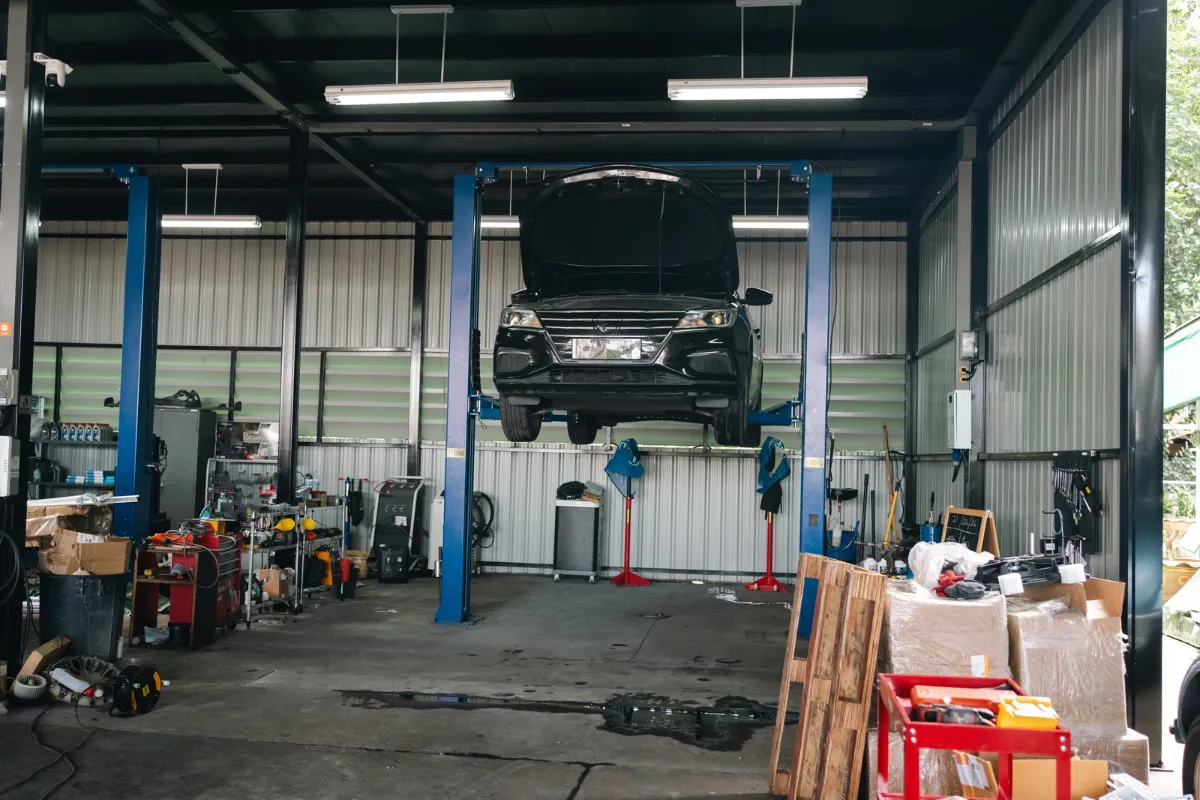
Concrete is not as still as it looks. In Prescott Valley, slabs expand on warm afternoons, contract on freezing nights and, in some neighborhoods, move slightly as clay soils swell and shrink with moisture. Detached shops and barns on acreage in Dewey-Humboldt and Chino Valley see even larger swings, since they are rarely heated.
All that movement concentrates at cracks and joints. Rigid coatings bridging those spots eventually chip or crack. Polyurea is different: it cures tough but flexible, stretching slightly with the concrete and absorbing impacts instead of fracturing. Here is when it makes sense and how we use it.
Three things drive most slab movement in the valley.
Temperature swings. Unheated garages and shops can drop below freezing on winter nights and warm significantly in afternoon sun. Each cycle expands and contracts the concrete slightly.
Soil. Parts of the area sit on clay soils that swell when wet and shrink when dry. Irrigation, monsoon rains and dry spells all affect them, which can open hairline cracks over time.
Loads. Trailers, tractors, RVs and heavy tools put concentrated stress on slabs, especially at edges and joints.
None of these are signs of a bad slab. They are just realities of the area. A flexible base coat is designed to handle them.
Rural properties around the Quad Cities often have a detached shop or pole building that does serious work. Floors there carry trucks, tractors, snowblowers, trailers and projects that stay in place for weeks. They are rarely heated, so they see the full range of temperatures.
That is exactly where polyurea earns its keep. Its flexibility handles the cold and the movement, its impact resistance shrugs off dropped parts and jack stands, and a textured topcoat keeps footing safe when snow melts off equipment.
If budget is a concern, we can coat the main working areas with a full system and seal storage bays more simply.
Our heavy-duty garage build: flexible base, full flake broadcast and a UV-stable, textured polyaspartic topcoat.
Pigmented polyurea with a grit topcoat for workshops and equipment bays.
Thicker layers for floors that carry heavy loads every day.
Polyurea-based fillers that move with the slab, used under many systems.
Both make good base coats. Here is how we decide between them.
| Situation | Epoxy base | Polyurea base |
|---|---|---|
| Heated garage, newer slab | Usually ideal | Works, may be more than needed |
| Unheated garage or shop | Can chip at cracks over time | Recommended |
| Many hairline cracks | Risk of chipping at crack edges | Recommended |
| Heavy equipment | Can chip from impacts | Recommended |
| Tight schedule | Slower cure | Faster cure |
We note cracks, joints and any signs of structural movement.
Diamond grinding opens the surface for a strong bond.
Moving cracks get flexible filler; static damage gets rigid repair.
Polyurea is applied in sections with flakes or pigment.
A textured, protective topcoat suited to the space.
Between freeze-thaw winters, monsoon summers and the mix of clay and rocky soils across the area, valley slabs move more than most people expect. That is why a flexible base is often our recommendation for older garages, unheated buildings and any floor with a history of cracking or chipping.
We will be clear about limits, too. If a slab is actively settling or heaving, cracks can come through any coating. We point out signs of structural movement during the estimate so you can decide how to proceed.
Polyurea sets quickly and needs exact mixing, a freshly ground surface and fast, even application. Deciding which cracks to fill flexibly, which rigidly and which need further investigation takes experience. It is not a product for a weekend kit.
Polyurea materials cost more than standard epoxy, but on most projects prep and labor are the larger part of the price, so the overall difference is often modest. For unheated shops, cracked slabs and heavy-use floors, the added durability usually pays off. For a heated, newer garage with a sound slab, we may recommend an epoxy base instead.
Sweep regularly, squeegee meltwater out in winter and wash with a neutral cleaner. Use pads under jack stands, kickstands and trailer tongues. If the topcoat dulls over the years, it can be refreshed without disturbing the polyurea base.
Garage gyms have become common in the valley, and they are tough on floors. Dropped plates, kettlebells and racks bolted to the slab concentrate force on small areas. Rigid coatings can chip under that kind of abuse. A polyurea base absorbs impact far better, and a textured topcoat keeps footing secure for lifts and cardio. Many homeowners add rubber tiles under the heaviest lifting zone and leave the rest of the coated floor open for easy cleaning.
Parts of the valley have expansive clay soils that swell when wet and shrink when dry. Lawn irrigation near the house, monsoon downpours and long dry spells all change soil moisture, which can open hairline cracks in garage and shop slabs over time.
A flexible base coat rides along with that kind of minor movement instead of chipping at every crack. It is also worth looking at what causes moisture changes: directing downspouts away from the slab and adjusting sprinklers near the foundation can reduce movement for any floor.
If you are comparing quotes, ask how the slab will be prepared, which cracks will be filled with flexible material, what topcoat goes over the base and whether it is rated for sunlight and deicers, and what minimum temperatures the installer works to. Clear answers to those questions say more about how a floor will perform than any brand name on the label.
Some of the toughest loads on a residential or shop floor never touch a tire. Trailer tongue jacks, mower decks set down on steel feet, motorcycle kickstands and engine stands press a lot of weight into a few square inches. Polyurea spreads and absorbs those loads far better than rigid coatings. Even so, a small square of plywood or a rubber puck under jacks and stands is cheap insurance for any topcoat.
Straight answers. If yours is missing, call (928) 555-0139.
Close cousins. In our systems, polyurea is the flexible layer against the concrete and polyaspartic is the sun-resistant clear layer on top.
Fine shrinkage cracks and joint movement are exactly what a flexible base is built to ride out. A crack caused by a slab that is still settling is a different story and can reappear through anything.
Yes, if it has a concrete slab. Polyurea is an excellent fit for unheated outbuildings.
Polyurea tolerates cooler temperatures than many epoxies, but each product has a minimum. We check conditions and use temporary heat when needed.
The base cures quickly. The topcoat usually decides timing, typically within a day or two.
Yes. Polyurea can be pigmented or topped with flakes.
Yes. Its impact resistance handles dropped weights well, especially with a textured topcoat.
Not necessarily. On a sound, newer slab in a heated garage, a quality epoxy base often performs very well and costs a little less. We will recommend what fits.
Yes. Uninsulated detached garages see the widest temperature swings of any building on a property, which is exactly where a flexible base performs best. We plan the install for a day when the slab is within the product range.
The base is not the walking surface. The topcoat sets the grip, and we add slip-resistant aggregate for garages, shops and gyms as standard.
We will map cracks, check conditions and explain whether polyurea is worth it for your space, with a written estimate.